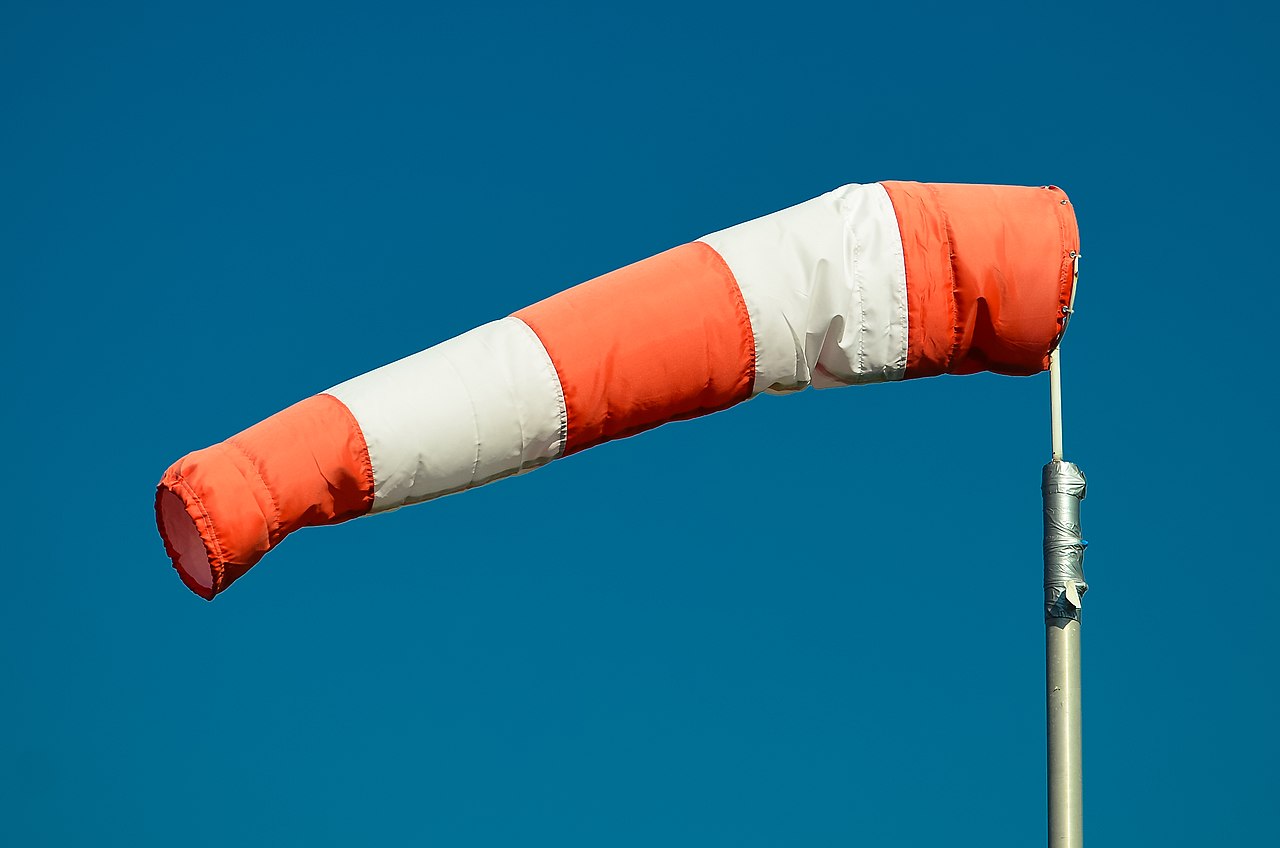
Windsock Guide: Master Wind Direction and Approximate Force
In a world increasingly reliant on sophisticated digital sensors, there's a timeless, elegantly simple device that continues to offer vital real-time information: the windsock. Far more than just a decorative sleeve, this seemingly straightforward instrument plays a crucial role in safety and planning across various sectors. For anyone needing to quickly gauge atmospheric conditions – from pilots preparing for takeoff to bridge operators monitoring crosswinds – understanding how to interpret a windsock is an indispensable skill. But what about the specific design, like the common red-white striped versions? Wie Wird Ein Rot-Weiß Gestreifter Windsack Gelesen, or how is a red-white striped windsock read?
This comprehensive guide will demystify the art of reading windsocks, focusing particularly on the ubiquitous red-and-white striped models. We'll explore how to accurately determine wind direction, get a reliable estimate of wind strength, and unlock the practical insights these visual indicators provide.
Decoding the Windsock: Direction and Force at a Glance
At its core, a windsock communicates two primary pieces of information: wind direction and approximate wind force. Its design, typically a conical textile tube mounted on a freely rotating mast, allows it to respond dynamically to air currents. The magic lies in its simplicity and immediate visual feedback.
When you observe a windsock, your eyes are drawn to two key elements: the mast and the sock itself. The prevailing wisdom, often distilled into easy-to-remember mnemonics, helps clarify their respective roles:
- Wind Direction: The windsock always points *downwind*, meaning it indicates the direction *to which* the wind is blowing. Conversely, the wind is originating from the direction the mast appears to be "looking" or "facing." If the windsock points north, the wind is blowing towards the north, and thus, it's a southerly wind.
- Wind Force: This is where the characteristic red and white stripes come into play. These segments are not just for visibility; they act as a rudimentary scale for estimating wind speed. The more segments that are fully inflated and held horizontal by the wind, the stronger the wind.
Mastering these two principles is the foundation of effective windsock interpretation, providing instantaneous insights that are crucial for safety and operational efficiency.
Pinpointing Wind Direction with Precision
The first and most fundamental piece of information a windsock offers is wind direction. Contrary to some initial assumptions, the windsock doesn't point *to* the wind's origin; it points *away* from it. This is because the wind fills the sock, pushing it in the direction it's moving.
To consistently and accurately determine wind direction, remember this simple rule:
"The wind comes from the direction the mast 'looks' towards, and the windsock 'points' in the direction the wind is blowing."
- Scenario 1: Windsock points East. This means the wind is blowing towards the East. Therefore, the wind is coming *from* the West. It's a Westerly wind.
- Scenario 2: Windsock points North. The wind is blowing towards the North, originating *from* the South. It's a Southerly wind.
- Scenario 3: Windsock points South-West. The wind is blowing towards the South-West, originating *from* the North-East. It's a North-Easterly wind.
This distinction is critical, especially in fields like aviation, where wind direction is always described by its point of origin (e.g., a "North wind" blows from the North to the South). A windsock's free rotation around its mast ensures it automatically aligns itself with the prevailing wind, providing a reliable and always up-to-date visual indicator. For a deeper dive into this fundamental aspect, you might find How to Read a Windsock: Interpreting Wind Direction & Strength particularly useful.
Decoding the Red-White Striped Windsock: Understanding Wind Strength
The distinctive red and white segments on many windsocks serve a dual purpose: enhanced visibility and, crucially, a visual scale for approximating wind strength. This segmented design is particularly common in areas where quick and clear assessments are necessary, such as airfields, along motorways, on bridges, or near industrial facilities like biogas plants.
When observing a striped windsock, you're essentially looking at how many of these segments are being fully inflated and held out by the wind. Each segment that is stretched out and appears "full" indicates a certain level of wind force. The more segments that are stiff and horizontal, the stronger the wind.
While this relationship isn't universally standardized like a scientific instrument, a widely accepted rule of thumb, especially in aviation, provides a valuable estimation:
- Each fully inflated segment (stripe) corresponds to approximately 3–5 knots of wind speed (roughly 5–9 km/h or 3–5 mph).
This general guideline can vary slightly depending on the specific design and manufacturer of the windsock. It's an estimation, not a precise measurement, but it offers immediate, actionable insight.
Interpreting the Visual Cues of a Striped Windsock
To fully answer Wie Wird Ein Rot-Weiß Gestreifter Windsack Gelesen concerning wind strength, let's break down the typical visual states:
- Slightly Inflated or Hanging Limply: If the windsock hangs mostly limp or is only slightly inflated at the mouth, it indicates near-calm conditions or a very light breeze (approaching "flaute"). This is minimal wind, often less than 3 knots.
- One Segment Stretched: When only the first segment closest to the mast is fully inflated and extended, it suggests a light, gentle wind. According to the rule of thumb, this would be around 3-5 knots.
- Multiple Segments Stretched: As the wind strength increases, more segments will progressively inflate and straighten out. If two or three segments are clearly stretched and horizontal, you're looking at a moderate wind. For instance, three segments would suggest 9-15 knots.
- Almost Completely Horizontal and All Segments Stiff: This is the clearest indicator of strong, robust wind. When the entire windsock is nearly horizontal to the ground and all its segments are taut and fully extended, it signifies significant wind force. This condition often points to winds exceeding 15-20 knots, potentially stronger depending on the specific windsock model.
Consider a practical example: You're on a bridge, and the windsock's mast is facing South. The windsock itself is pointing North and is almost perfectly horizontal with all its red and white stripes fully stretched. This visual tells you unequivocally: "The wind is strong and originating from the South, blowing directly towards the North." For more detailed information on deciphering these segments, consider reading Red-White Windsock: Deciphering Wind Strength from Segments.
Beyond the Basics: Advanced Tips for Windsock Interpretation
While the fundamental principles are straightforward, becoming a skilled windsock interpreter involves more than just a quick glance. Here are some advanced tips and insights to enhance your understanding:
- Context is King: Always consider the windsock's surroundings. A windsock positioned in an open field will give a more accurate reading of the ambient wind than one situated near tall buildings or irregular terrain, which can cause turbulence and localized wind shifts. Understand that the windsock indicates conditions *at its specific location*.
- Observe Over Time: Don't just take a snapshot. Observe the windsock for a few moments. Does it fluctuate wildly, suggesting gusty or turbulent conditions? Does it consistently hold a certain direction and strength? This temporal observation can reveal patterns and inform decisions better than a single, instantaneous reading.
- Recognize Limitations: A windsock is an estimation tool, not a precision instrument. It doesn't provide exact wind speed in knots or km/h, nor does it account for factors like air density, temperature, or wind shear at different altitudes. For precise data, specialized meteorological instruments are required. However, for immediate visual assessment, its value is unmatched.
- Understand Its Purpose: Windsocks are strategically placed where real-time, visual wind information is critical. This includes runways (at both ends), helipads, hazardous material handling sites, chemical plants, along highways prone to crosswinds, and in paragliding or skydiving zones. Knowing the context of its placement can add to your interpretation.
The ability to quickly and accurately read a windsock, especially the commonly encountered red-white striped variety, empowers individuals across various disciplines to make informed decisions that prioritize safety and efficiency. It’s a testament to effective design – a simple device delivering profound insights.
Conclusion
The windsock, with its iconic red and white stripes, stands as a testament to effective, low-tech communication in a high-tech world. It masterfully conveys crucial information about wind direction and approximate force, vital for everyone from aviators to general enthusiasts. By understanding that the windsock points downwind, that the mast indicates the wind's origin, and that its inflated segments provide a visual scale of strength, you gain a powerful tool for environmental awareness.
While not a replacement for precise instrumentation, the windsock's immediate, visual feedback is invaluable. It encourages mindful observation of our atmospheric surroundings, fostering better decision-making and enhancing safety wherever the wind plays a significant role. So, the next time you spot one, take a moment to "read" it – you'll be surprised at how much it tells you.